Fifty Years of Herstory
An Interview with Cheryl McLean by Anaïs Godard
Get the 50th anniversary issue of CALYX Journal here
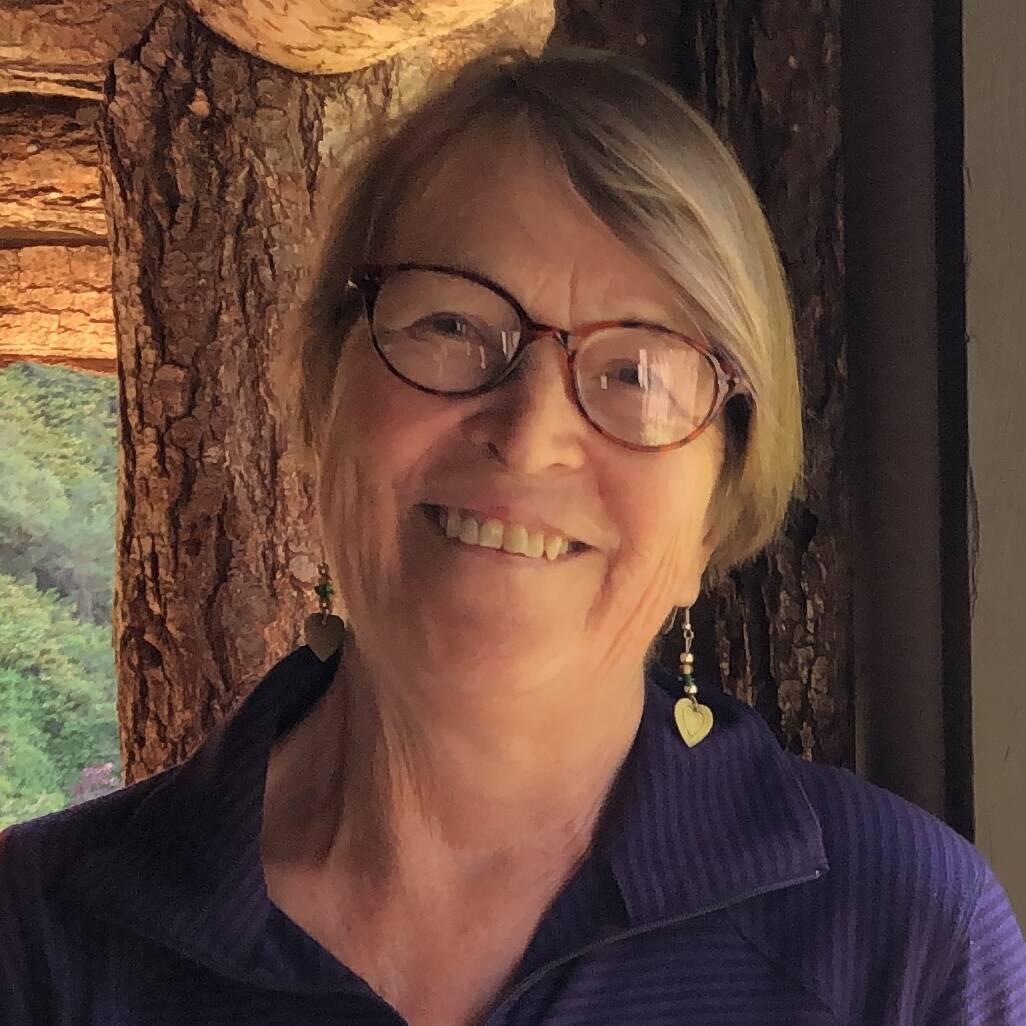
Cheryl McLean has been part of CALYX since 1979, long enough to remember when journals were assembled by hand, late at night, on borrowed light tables, and long enough to have designed the majority of the issues since. Proofreader, editor, designer, archivist: Cheryl has carried the visual memory of CALYX across five decades, adapting to each new technology while holding fast to the journal’s core belief that women’s work deserves care, rigor, and permanence.
If CALYX has survived, in part, it is because someone kept the files, counted the lines, proofread the proofs, and showed up again the next issue. Cheryl is that someone.
Be fearless. Shine the light.
Q1. You’ve carried the visual memory of CALYX for decades. How has the journal’s aesthetic, its visual feminism, changed over time? And what choices stayed deliberately stubborn?
My first role with CALYX was actually as a proofreader. It was 1979, and I had just graduated from Oregon State University with a BA in English when I met Barbara Baldwin, one of the founding editors, at a party my partner and I were hosting. I was lamenting that my first job out of college was as a cocktail waitress, and she suggested I get involved with CALYX to put my love of literature to work.
My first task was proofreading the French translations for the International Issue, a two-volume edition that included work by Wisława Szymborska, who later won the Nobel Prize, and the first color reproductions of Frida Kahlo’s paintings published in the US.
I eventually joined the editorial collective at a time when every volunteer read every submission. We divided the work into packets, read everything, then met to discuss it. Sometimes a piece just needed editing, and an editor would work directly with the author. But because decisions were made collectively, if everyone didn’t agree, the piece wasn’t published. Those meetings could get lively!
My design role came later. Carolyn Sawtelle did the layout until the mid-1980s. I began typesetting for the journal on my old Kaypro computer, which looked like a shortwave radio designed for the army. Before that, we had to pay a typesetter, so any work a volunteer could absorb helped the bottom line.
Layout was done page by page on light tables. Each page had to be cut by hand from rolls of typeset. We counted lines, then cut carefully between them to avoid slicing through letters.
After graduate school, I worked at OSU Extension Communications, writing copy and designing publications using early PageMaker on an Apple Mac. I fell in love with design there and bought a Mac for home. That technology changed everything—I could design pages myself and see them on screen before printing proofs.
Aesthetically, the intention was always for CALYX to stand out as a professional, top-quality journal. That hasn’t changed. We still proofread carefully—no single person can catch everything. The feminist aesthetic lives in the work itself: the cover art, the words, the images. That’s what has allowed CALYX to remain responsive to artistic, social, and cultural shifts over time.
You don’t need a résumé here. The work speaks for itself.
Q2. You were there in CALYX’s most handmade, idealistic years. What moments from working with the founders still linger for you?
Above all, it’s the shared idealism, the deep commitment to amplifying women’s voices, that has carried CALYX forward year after year. That spirit started with the founders and has been passed along through generations of volunteers and interns.
By the time I joined the editorial collective, Margarita Donnelly was the only founder still actively involved. Her dedication was a marvel, as was her energy. She made connections across the literary and feminist worlds, and her passion for CALYX was infectious.
We also had incredible community support. The owner of Gary’s Johnny Print let us use his back room after hours to assemble the journal. We’d be there until two in the morning, but having light tables and a full-page waxer made a huge difference.
I remember being at the American Booksellers Association book fair in the early ’90s with Scottie, our office manager. On our way to a gathering, she stopped to greet two elderly women as if they were old friends. Later I asked if she knew them. She said, “Oh no, just my old dyke radar.” She’d told them she was from CALYX, and they got a little teary. CALYX, they said, was where they first learned there were other people like them.
And then there were practical acts of faith. When we didn’t have enough money to print an issue, Margarita and I put our cars up as collateral for a loan. Luckily the banker didn’t need to see the vehicles because neither old VW was worth the loan value.
Q3. Fifty years is an eternity for a literary journal. What has kept you here? What part of the CALYX community feels most essential to its survival?
The mission of CALYX is just as relevant now as it was fifty years ago. While progress has been made, major publications are still dominated by men. CALYX’s commitment to marginalized voices takes that mission even further. You don’t need a résumé here. The work speaks for itself.
Our donors and subscribers are essential. Their support makes it possible for writers, editors, and artists to showcase their work in a professionally produced publication, one sustained entirely by volunteers. Grant funding is never guaranteed, especially in the current climate, so expanding our reader base feels essential.
Q4. If you had to name one thing this moment in history demands from feminist publishing, what would it be?
Be fearless. Shine the light.
Anaïs Godard is a Franco-American writer based in Los Angeles, CA, and former television producer who spent a decade interviewing celebrities. She is the 2025 Mike Resnick Memorial Award winner and a Letter Review Prize recipient. Her work has been published in McSweeney’s, Hobart, Fractured Lit, and elsewhere.