Fifty Years of Herstory
An Interview with Judith Sornberger by Anaïs Godard
Get the 50th anniversary issue of CALYX Journal here
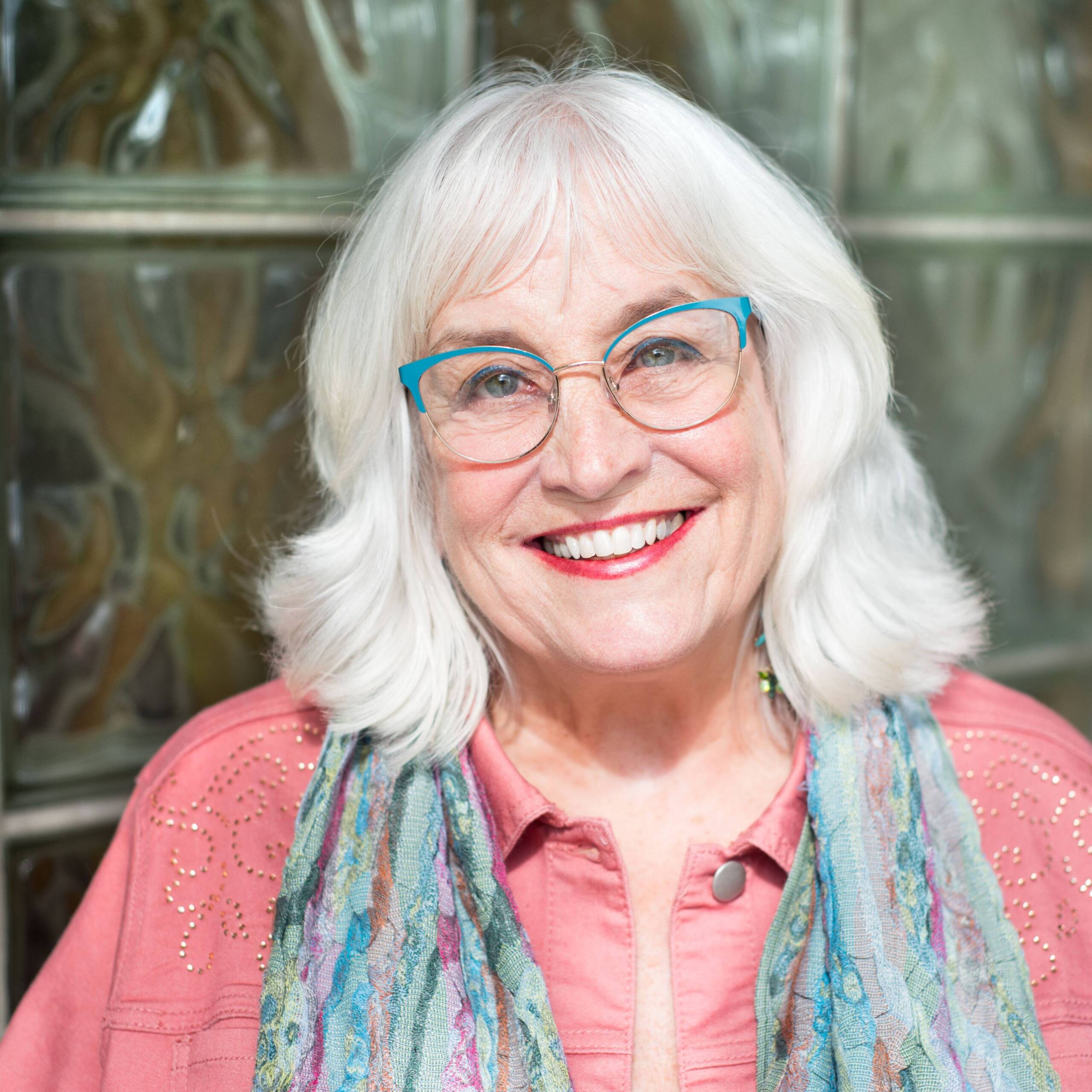
Judith Sornberger has been publishing with CALYX long enough to have watched both the journal and herself grow, sometimes in tandem with, sometimes in defiance of the times. First published in CALYX in the early 1980s, she has returned to its pages across four decades, as poet, book author, and devoted reader.
In this conversation, Sornberger reflects on feminist publishing as companionship rather than milestone, on the material power of the printed page, and on why women’s voices still need fiercely protected space.
CALYX helped me grow up as a writer.
Q1. You’ve been published in CALYX across four decades. What has it been like to watch the journal and your own voice grow side by side?
I hadn’t realized until you asked that I’d had poems in CALYX in each of the last four decades. I first learned about the journal when I was a nontraditional student in my late twenties at the University of South Carolina. Knowing I wrote poems, a professor, Paula Feldman, showed me a copy. Back then the journal was stapled, not perfect-bound, but it was beautiful even then.
It took me a while to work up the courage to submit, and to believe I’d written anything good enough. CALYX was the first journal to publish one of my poems, “Knowing My Name.” I felt like I’d hit the big time. I was a real poet, surrounded by other women whose work I admired. I still remember the astonishment of opening an issue and seeing one of my poems alongside one of my favorite poets: Marge Piercy.
In those early decades, my poems were overtly feminist, and I was grateful to have a venue that didn’t shy away from that. Even later, when my work was less polemical, it almost always centered women—grandmothers, mothers, sisters, friends, women’s lives. While working as an editorial assistant at Prairie Schooner in grad school, I became painfully aware that many journals published five poems by men for every one by a woman. It’s better now but still not equal.
I’ve always felt companioned by CALYX and the writers published there. It never fails that I find work I love in its pages.
For every five poems by men, there was usually just one by a woman. It’s better now but still not equal.
Q2. CALYX published your book Open Heart when Margarita Donnelly was leading the press. What stands out from that experience?
Open Heart began as my doctoral dissertation in a program that welcomed creative work. I’d sent it to several book contests and had been a finalist a few times. When I learned CALYX was publishing books, I decided to submit, hoping that the poems’ earlier appearances in the journal might help.
I could hardly believe it when Margarita’s acceptance letter arrived.
I flew to Corvallis for a small book tour and to meet the editors. I wish I remembered everyone’s names, but I vividly remember the warmth: a convivial lunch, a reading at a women’s bookstore, a small but deeply appreciative audience. One woman told me she’d come because she’d liked my poems in CALYX Journal. I felt like a rock star!
I also read at Elliott Bay Bookstore in Seattle, where I met Leah Kosh, the artist who created the stunning paintings for the book’s covers. Everything CALYX does—journal or books—has always been done with extraordinary care. I couldn’t have been prouder of my first book or the way it was brought into the world.
Q3. What keeps drawing you back to CALYX as a poetic home?
I’ve always been proud to have my work published in CALYX. I imagine myself as one voice in a chorus of women’s voices, singing from different backgrounds and experiences. To be part of that chorus is an honor.
Q4. If you had to name one thing this moment in history demands from feminist publishing, what would it be?
Oh boy, this question is a doozy. I’ll never forget a male colleague once referring to our era as “postfeminist.” I remember replying that in order to have a postfeminist age, we’d first need a feminist one, and we hadn’t gotten there yet.
As the creator of the Women’s Studies program at Mansfield and its first director, I was always breaking both bad news and good to my students about women’s progress and lack thereof. But in the twenty-five years I taught there, I did see signs of change, both in my students and in the world in general.
At this moment, feminist publishing feels more necessary than ever. Women’s rights, especially our rights to our own bodies, have slid downhill. Respect for women, minorities, and LGBTQ people has been seriously diminished. That’s why I believe so strongly in the printed word. It feels less ethereal than the online word. Maybe because I’m a bit of a Luddite.
In any form, women’s voices need to be heard and honored, now more than ever.
Q5. Is there anything else you’d like to add?
I want to wish CALYX a very happy fiftieth anniversary, to honor Margarita Donnelly, its founder, and to thank the editors and staff who carry this work forward. The journal helped me grow up as a writer, and I know it has done the same for many women. Congratulations, and thank you.
Anaïs Godard is a Franco-American writer based in Los Angeles, CA, and former television producer who spent a decade interviewing celebrities. She is the 2025 Mike Resnick Memorial Award winner and a Letter Review Prize recipient. Her work has been published in McSweeney’s, Hobart, Fractured Lit, and elsewhere.