Fifty Years of Herstory
An Interview with Susan Pace by Anaïs Godard
Get the 50th anniversary issue of CALYX Journal here
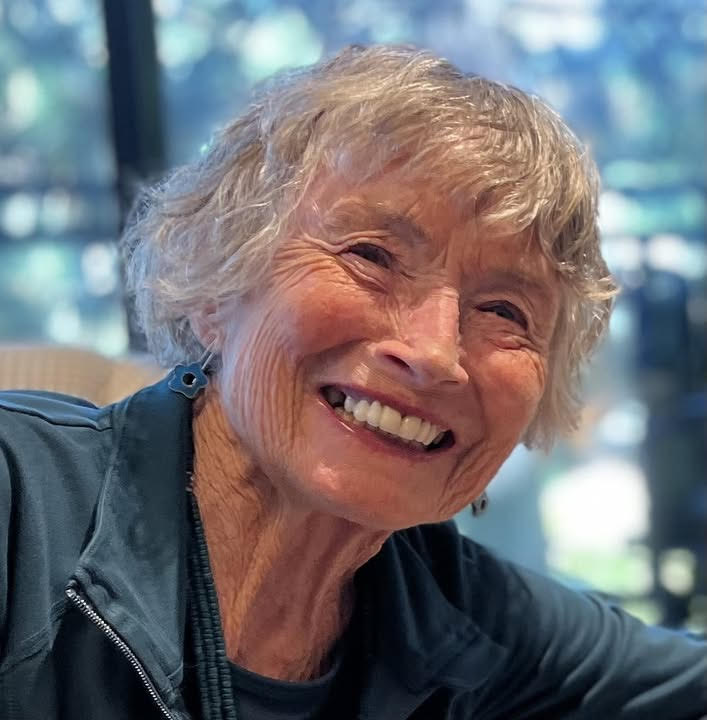
Susan Pace is a prose writer whose relationship with CALYX spans decades, not because it was smooth, but because she stayed. Accepted, rejected, shortlisted, overlooked—she kept submitting, revising, and believing that persistence is not naïveté but practice. In 2020, she won the Margarita Donnelly Prize for her essay “The BADASS Study,” proving what feminist publishing has always known: sometimes the long game is the point.
In this conversation, Pace reflects on rejection as instruction, on anonymous success as liberation, and on why writing, like living, requires showing up even when the answer is no… and knowing when to dance anyway.
Writers and readers need to find a way to dance—or plod—through this together.
Q1. You’ve submitted work to CALYX for decades, sometimes accepted, sometimes rejected. What has that long relationship taught you about resilience, revision, and feminist publishing?
All of my life, I have feared rejection. It’s a quality I’ve worked to accept. Writing, submitting my work, and having it rejected taught me that sometimes the word no isn’t bad. It can lead to better ideas—either through rewriting or by resubmitting somewhere else.
Persistence has allowed me to live a life of hope and love, and to realize that persistence can eventually lead to acceptance.
Q2. You won the 2020 Margarita Donnelly Prize for “The BADASS Study.” What was it like to have a piece succeed anonymously, purely on voice and craft?
I danced around my condo and told everyone, including the mail carrier and the clerk at the supermarket.
I didn’t expect to win. I submitted because I hoped “The BADASS Study” would find a home in print. The acceptance felt like encouragement to keep learning, writing, and working on my craft.
Sometimes the word no isn’t bad. It can lead to better ideas.
Q3. Is there a moment from your submission or publication history that still stays with you?
I once had a personal essay rejected with the worst—and most personally insulting—handwritten letter I’ve ever received. It was so awful, full of impossibly long sentences and swear words, that I actually laughed.
Later, I found out the editor was fired. What I learned was that rejection, or acceptance, isn’t about me. There’s no need to take it personally. Take it professionally. And move on.
Editing is hard work. I certainly couldn’t do it.
Q4. If you had to name one thing this moment in history demands from feminist publishing, what would it be?
Keep going.
Clouds come and go. The sunlight changes. So does the darkness of night. Writers and readers need to find a way to dance—or plod—through this together.
Q5. Is there anything else you’d like to add?
Thank you for all you do and give.
Anaïs Godard is a Franco-American writer based in Los Angeles, CA, and former television producer who spent a decade interviewing celebrities. She is the 2025 Mike Resnick Memorial Award winner and a Letter Review Prize recipient. Her work has been published in McSweeney’s, Hobart, Fractured Lit, and elsewhere.