
Fifty Years of Herstory
An Interview with Beverly McFarland by Anaïs Godard
Get the 50th anniversary issue of CALYX Journal here
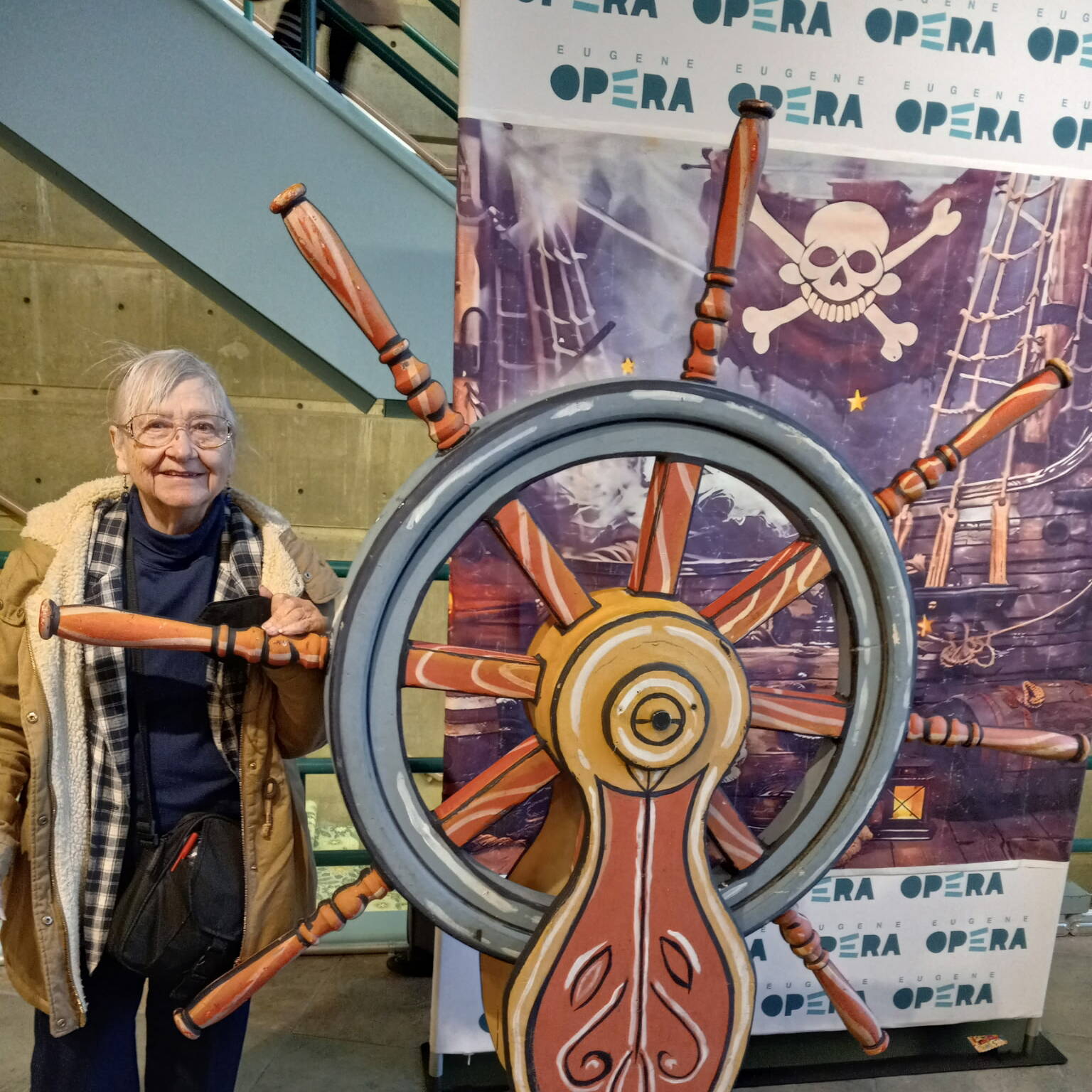
Beverly McFarland spent decades inside the engine room of CALYX, where manuscripts were read in packets, decisions were made collectively, and editorial labor was treated as both craft and care. A Senior Editor and longtime coordinator of the journal’s editorial process, she helped shape CALYX through eras of linotype, light tables, computers, and crisis, always with rigor, humor, and an unshakable belief in women’s voices.
In this conversation, McFarland reflects on collective decision-making, editorial intimacy, the emotional weight of the work, and what it takes practically and morally to keep a feminist press alive.
I enjoyed welcoming women into the CALYX family.
Q1. You were deeply involved in CALYX’s editorial collectives for many years. What did collective decision-making actually look like in practice?
There were several collectives during my tenure. The main Editorial Collective—usually six to eight women—made final decisions about what manuscripts to publish. Editing was also done collectively, though with a smaller group of three or four. I loved collective work.
There were separate collectives for poetry books and prose books, with some overlap in membership. Margarita was initially part of all of them. I didn’t weigh in on poetry book decisions because I didn’t feel as knowledgeable there, but I attended those meetings anyway, since I was responsible for writing acceptance and rejection letters and overseeing editing. I wanted as much context as possible.
I started as a volunteer in 1987 and joined the staff in 1990 as Editorial Coordinator—a title I loved because it accurately described my job: coordinating all editorial processes for the journal and most of the books. I had a Bachelor’s of Journalism, a BA in English from Texas, and an MA from Oregon State, and I truly felt I had my dream job. My title later became Senior Editor.
The Editorial Collective usually voted on each piece. We aimed for consensus and almost always reached it. If there was strong disagreement, a piece might be held over for another week. Importantly, all manuscripts were read by at least two people. First readers, volunteers, picked up packets of ten manuscripts and marked each one as “hold,” “reject,” or “maybe.” Two rejects went straight out with a form letter. Two holds meant the manuscript moved on to the full collective for discussion. “Maybes” were rare and reshuffled for another read.
These processes were in place from CALYX’s founding in 1976 through my retirement in 2011, though things were beginning to change as online submissions arrived. Some of us old-timers liked paper.
I retired earlier than I’d planned because my husband developed a genetic kidney disease. I had hoped to continue reading submissions, but during that period I realized I couldn’t emotionally manage the intensity of the material coming in. Editing, however, required less emotional engagement, and I continued editing accepted manuscripts until 2022. I’ve known other women who stepped away from the collective for similar reasons. It speaks to the emotional depth of the work we publish.
Margarita Donnelly initially led the collective. She was a force of nature, but she never imposed her will. I do remember one time she loved a story most of us didn’t. A few of us negotiated: we’d accept that piece if she’d accept one we loved that she didn’t. That kind of bargaining happened.
As Margarita shifted more toward grant writing and the business side, I took over leadership of the Editorial Collective, while she continued working on book decisions and reviews.
Accepting work was my favorite task. I often added personal notes to acceptance letters, sometimes sparked by a place I’d visited or something in an author’s bio. That correspondence led to lasting connections and invitations all over the world. I loved welcoming women into what I always called “the CALYX family.”
Editing itself was collaborative but generally harmonious. I gathered edits, resolved questions, and always sent final changes to authors for approval. We never made changes without consent. Poets were often the easiest to work with—mostly we were checking consistency or intent. Occasionally, editorial suggestions led to wonderful revisions, even new stanzas.
The publishing process changed completely during my tenure, from linotype machines to computers. It still amazes me.
All manuscripts were read by at least two people. We took that responsibility seriously.
Q2. You worked closely with Margarita Donnelly. What do you carry from that collaboration?
I’d worked with many strong personalities before CALYX, so Margarita didn’t intimidate me. Some volunteers asked not to work with her; I made sure to keep them busy elsewhere. She recognized that I had editorial strengths she didn’t (I understood semicolons), and I respected her extraordinary talents: grant writing, public relations, networking, remembering names.
She could be intense, especially during grant deadlines. She liked to say she was “very Irish”: quick to anger, quicker to forgive. I’m not wired that way, so I learned to mentally compare her to a few memorable eighth graders I’d taught and smile.
One of the most difficult moments we shared was the anthrax scare. At the time, the news was full of warnings about envelopes containing white powder, with particular concern around East Coast postmarks.
That fall, on October 1, the start of our open submission period, we spread the mail out on the table and realized that nearly all the envelopes were postmarked from New York or nearby states. Margarita and I looked at each other and said, Uh oh. We sent the interns back to other work and decided to handle the mail ourselves. After consulting the post office, we armed ourselves with rubber gloves, bleach, garbage bags, scissors, and a strict protocol. For three months, the three staff members opened every submission carefully over a trash bag, ready to evacuate the floor if we saw any trace of white powder. Thankfully, nothing happened. Still, the vigilance stayed with me. We were aware that not everyone approved of a journal publishing only women. We’d received hate mail before, and we took the threat seriously. After each session, we wiped down everything with bleach. I still own clothes with white spots from those days, small, lasting reminders of the risks taken quietly to keep CALYX going.
Q3. CALYX has always relied on fundraising and community support. What sustained that work?
I wouldn’t describe myself as a fundraiser, but I participated in phone drives. We called only previous donors or subscribers. What sustained us wasn’t persuasion, it was belief. Our donors believed deeply in the mission, and that made all the difference.
Q4. What does this moment in history demand from feminist publishing?
Our mission has never been more important. To give all women a voice. We once published an eleven-year-old book reviewer. If this interview runs, I may be the oldest contributor at eighty-eight. That span matters. The diversity of voices across race, age, and experience is one of CALYX’s greatest strengths.
Q5. Is there anything else you’d like to add?
One of my great joys was working alongside my daughter Laura as a CALYX volunteer. She was one of the young women editors on the young women’s special issue Present Tense. It truly became a family effort, my husband, my sons, all pitching in at various points. Those are very fond memories.
Anaïs Godard is a Franco-American writer based in Los Angeles, CA, and former television producer who spent a decade interviewing celebrities. She is the 2025 Mike Resnick Memorial Award winner and a Letter Review Prize recipient. Her work has been published in McSweeney’s, Hobart, Fractured Lit, and elsewhere.