
Fifty Years of Herstory
An Interview with Brenna Crotty by Anaïs Godard
Get the 50th anniversary issue of CALYX Journal here
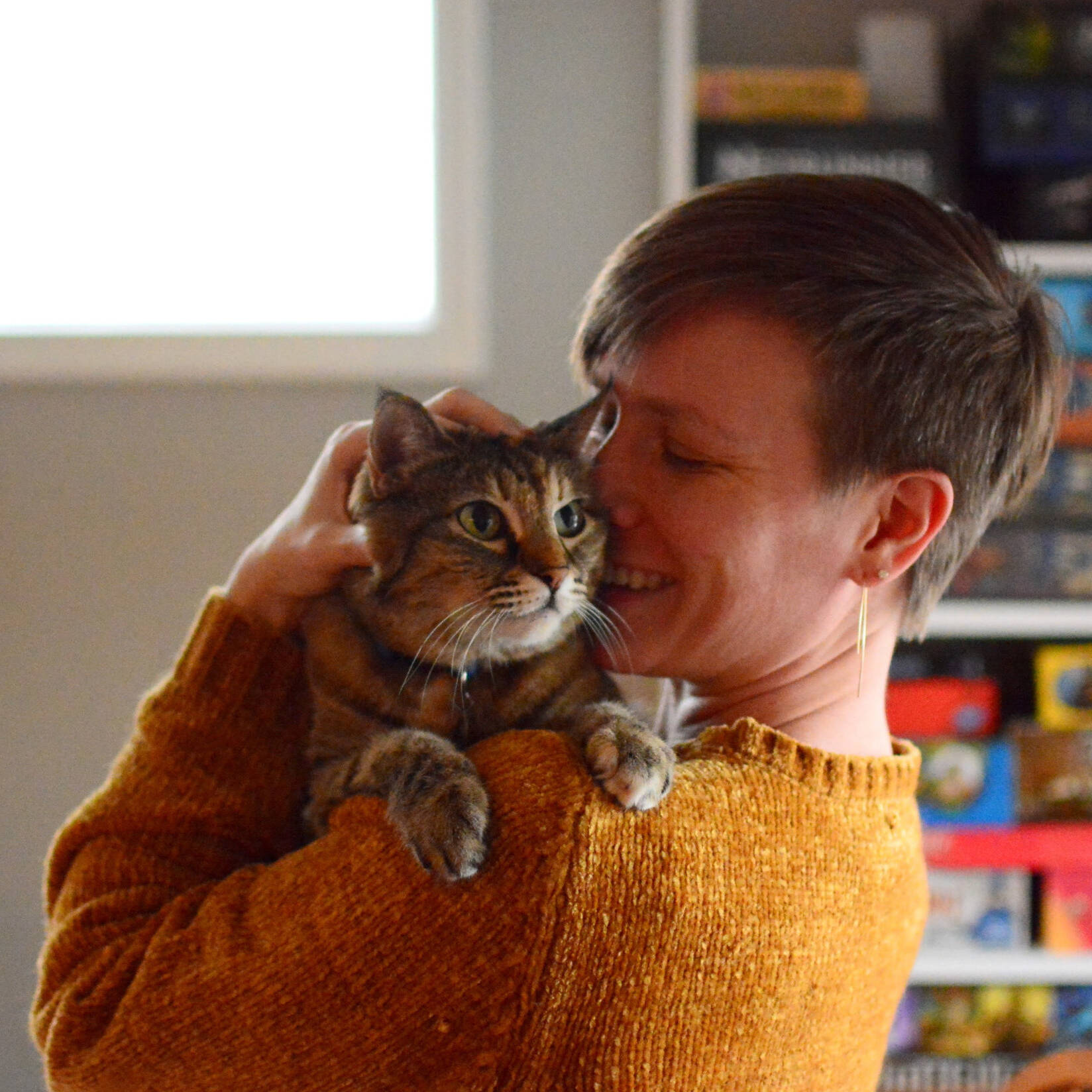
Brenna Crotty arrived at CALYX in 2013, just as the journal was hovering between inheritance and disappearance. The founders were stepping back, leadership was fractured, and the archive, like so many feminist histories, existed in boxes, memories, and gaps. Someone had to decide what survived.
What began as an internship became something closer to custodianship. Through slush piles and meetings, copyedits and pagination, author emails and institutional triage, Brenna did what feminist presses have always relied on: she stayed. She rebuilt CALYX from the inside out, honoring its radical origins while expanding its vision to meet the urgencies of the present.
Now Senior Editor, Brenna holds a clear, unsentimental belief: feminist publishing is not here to make history comfortable. It is here to contradict it, correct it, and, when necessary, “tell it to go to hell.”
Feminist publishing exists to tell history to go to hell.
Q1. You stepped into CALYX during a moment of upheaval—leadership shifts, loss, and a legacy suddenly up for grabs. What pulled you in so young? Was there a moment you realized you weren’t just interning anymore, you were keeping the lights on?
I came to CALYX because I’d been part of a six-person creative writing program at the University of Oregon with Kelsey Greco. She graduated, went to CALYX, and took over Margarita Donnelly’s role in 2011. Margarita was one of the four founders and the longest-running member—the face and fire of the organization. Her stepping away was nearly a death blow. For years people would say to my face, “Oh, CALYX—I thought that went under.”
I met Margarita only a few times before she passed away from cancer, but even in those brief moments I heard stories about her smuggling illegal fruit across the Venezuelan border and throwing soirees with Ursula K. Le Guin.
Kelsey invited me to join as a reader, which interested me. I wanted to be an editor; I realized this during that same program when I found myself redlining visiting authors’ books and offering them notes after lectures. (The audacity of me at twenty-one! I stand by it, though, for the time I caught “peeked” instead of “piqued” in a published novel. It still haunts me. And probably the author.)
I thought I’d get some volunteer experience, learn the slush pile, and move on. But something happened. A lot of women my age transitioned to paying jobs, while CALYX’s elders were left holding a banker box of stunning creative history with no one to hand it to. They had brilliant, passionate editorial collectives but no structure to keep CALYX alive as a business.
What kept me there was that perfect storm: gorgeous art and literature, furious and generous people, license to run my mouth whenever the goddamn the internet went down, and the knowledge that this place needed someone to show up and do the work.
I think I realized I was more than an intern when I was stamping mail and asked the only other staff member at the time, Alicia Bublitz, “Hey, aren’t the editorial collectives supposed to discuss these held submissions?” She said, “Yeah, I think there’s supposed to be an editorial coordinator who runs meetings in February.” It was August. So I started running meetings.
Anyone who’s worked in nonprofits knows: the moment you say, “I guess I can do that since it desperately needs doing,” you’re sunk. All the jobs now belong to you.
Q2. It sounds like you inherited CALYX’s history at a time when much of the archive was fragmented or lost. What felt like a gift, and what felt like a dare? And how did you manage rebuilding an institution’s backbone while also juggling a day job and a toddler?
Beth Russell has done extraordinary work over the last few years cataloguing and archiving CALYX’s history, but a lot of it is simply gone. Folks used to joke (or gripe) that Margarita had a Rolodex in her head of everyone who’d ever submitted, donated, published, or shown up. Losing her was like losing the Library of Alexandria.
There are photo albums we’ve found in the office where we flip through asking, “Who is that? When is this? When did they get matching T-shirts?”
In some ways, we inherited an attic full of keepsakes. You uncover things and go, I don’t know what this means, but I can feel that it’s sacred.
Early CALYX was radical—socialist, queer, angry, dark, feminist. The work from those early zine years is raw, vulnerable, tough, and proud. I like that some of it remains mysterious. You get what you find on the page.
That mystery also gave me room to change things. Second-wave feminism hadn’t yet been co-opted by corporate “boss bitch” PR marketing slop, so it was purer in some ways, but it could also be rigid and binary. CALYX began as a platform for women, and not having a rulebook meant I got to explicitly expand what “women” meant. Over the last decade, we’ve worked to more overtly invite in trans women, nonbinary creators, and gender-fluid folks. The point was never exclusion—it was to center marginalized voices.
And how did I manage all of that while working a separate full-time job and raising a toddler? Poorly.
Anyone who’s worked in nonprofits knows: the moment you say, “I guess I can do that since it desperately needs doing,” you’re sunk. All the jobs now belong to you.
Q3. You joke about “blathering” in editor’s notes, but most of the real labor—slush, collectives, edits, pagination—happens offstage. How do you balance being the public voice with the invisible work that actually keeps a feminist press alive?
That one’s tricky. No one wants to consume art wrapped in editorial complaining. I’ve always found it bad taste to be like, “Look how hard this was and how tired we are.”
But I do want people to understand the labor. We have so many incredible volunteers who show up year after year for no pay. Slush readers read almost year-round. Editors meet weekly for hours. Editorial coordinators write detailed feedback for rejected authors. Copyeditors read pieces two or three times before bluelines.
We do it because we care. Because we want to build community. But holy lord, it’s a lot. Add events, PR, social media, workshops, fundraising, grant writing, and you start to see how dependent this is on people donating from the tiniest crevices of free time or income that they have.
I call it “blathering” because I’m deeply uncomfortable being the public voice of anything. I like CALYX because it strives for non-hierarchical feminist ideals. Also, I’d happily sit in the dark, communicate via email, and spend all my time dithering about whether or not to use commas after introductory adverbial phrases (which Beverly McFarland has an opinion on right now if she’s reading this).
Q4. If you had to name one thing this moment in history demands from feminist publishing, what would it be?
History doesn’t get to demand anything from us! History has demanded that women fix broken systems for far too long. Feminist publishing exists to tell history to go to hell.
So much herstory is lost because textile work doesn’t last like architecture does and because women’s accomplishments are stolen, miscredited, suppressed, minimized, and villainized. History can make demands on someone else.
Feminist publishing exists simply to exist—to let women and nonbinary writers tell their stories, inhabit their bodies and experiences without being objectified or whittled down.
Q5. When you look ahead fifty years, what future do you imagine for CALYX?
Margarita once looked at the abysmal rates of women in publishing and decided CALYX was necessary. She figured she’d run it for “five years, maybe ten,” until a glorious egalitarian utopia was achieved and CALYX was no longer needed.
So I suppose I hope, with all the frosty optimism left in my furious heart, that in fifty years CALYX doesn’t exist at all.
Anaïs Godard is a Franco-American writer based in Los Angeles, CA, and former television producer who spent a decade interviewing celebrities. She is the 2025 Mike Resnick Memorial Award winner and a Letter Review Prize recipient. Her work has been published in McSweeney’s, Hobart, Fractured Lit, and elsewhere.