
An Interview with Jean Hegland by Debbra Palmer
We’re not going to survive by ourselves. We’re going to survive as a community with each other.
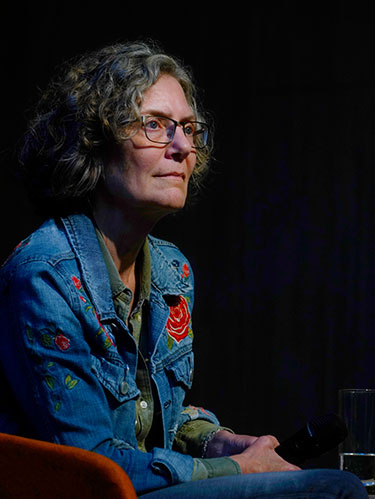
Into the Forest, Jean Hegland’s poignant debut novel that first graced our bookshelves in 1996, has become a touchstone in contemporary literature. It is a deeply moving narrative, centered on the lives of two sisters who find themselves navigating a world that has unraveled. It invites readers to reflect on the profound connections between humanity and the natural world. The novel’s lyrical prose and emotional depth resonated widely and still resonate thirty years later, earning a cherished place in discussions about our environment and society. The story’s impact was further magnified by its adaption into a film in 2015, which brought Hegland’s vision to an even broader audience. Now, thirty years later, with the release of the sequel, Here in This Next New Now, readers find themselves once again drawn into the lives of the main characters, reminding us of the enduring relevance of their journey. Hegland’s work continues to inspire both long-time fans and new readers, highlighting the timeless themes of resilience and connection.
I was so honored to talk with Jean and to tell her how important her first book was to me when I first read it as an undergrad in 1996, and if you haven’t read Into the Forest, I hope you will, because it carries a message that is very relevant to these times we’re in. In the interview, we talk about Jean’s new book, Here in This Next New Now, which we’re eager to receive in the US, and about Nell and Eva, who are navigating their thirties alongside their teenage son, Burl. Jean shares with us the transformative journey her characters undertake. From survival in the wilderness to the challenges of parenthood. We delve into the significance of fire in their lives, both literal and metaphorical force, and how climate change weaves through the narrative that resonate with our current reality. For example, we talked about the Walbridge Fire in 2020 that destroyed Jean’s family’s home in the northern California forest that served as inspiration for the setting of Into the Forest and Here in This Next New Now. We looked deep into the questions that drive her work, such as what we truly need in life, our fears, and how connection with others and forming community is still the key for our survival as human beings.
Jean Hegland was born and raised in Pullman, WA, just eight miles from the Washington/Idaho border. Her parents taught her to love books, reading, and writing. She began college at Fairhaven in Bellingham, WA, and received her BA in liberal arts from Washington State University in 1979. Her first jobs included making stain-glass windows for local businesses and housekeeping at a nursing home. Then, at Eastern Washington University, Jean earned her master’s in rhetoric and the teaching of composition, which led to years of teaching creative writing. Jean is a frequent speaker and instructor at writers’ conferences and workshops. She’s taught abroad in Germany and Italy, has been a writer-in-residence at the college of York St. John and York England, and in 2019 she entered a writer’s residency in Switzerland, where she finished her most recent novel, Here in This Next New Now. Jean has three grown children, a beloved stepdaughter, six granddaughters, the world’s best cat, and several hives of bees.
CALYX has a place in my heart that is so huge and so special. Into the Forest was rejected several dozen times by other small presses… And then CALYX picked it up.
TRANSCRIPT
The following interview features spoilers for the 1996 novel (and subsequent 2015 film), Into the Forest.
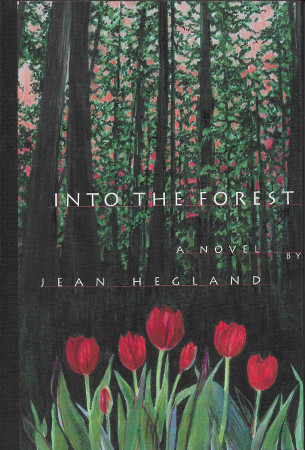
Debbra Palmer: Thank you, Jean, so much for agreeing to meet with me and talk with me about your new book, and also to look back at where everything sort of began with CALYX and our relationship with you—our fortuitous relationship with you, Jean Hegland. So, it’s been nearly thirty years since readers first fell in love with Nell and Eva from your incredible novel, Into the Forest. Since it was first published in 1996, it has been translated into more than a dozen languages. The French translation, Dans la foret, was a bestseller in France, where you’ve been on a book tour for the last few weeks, and now you’re back to talk with me about your new sequel. And I want to ask: what inspired you to write a sequel after nearly thirty years?
Jean Hegland: Thanks, well, you know what—I just want to begin by saying it’s just such a pleasure to talk with you, Debbra. And CALYX has a place in my heart that is so huge and so special. Into the Forest was rejected several dozen times by other small presses before CALYX picked it up. I couldn’t find an agent, and it was rejected, you know, many, many, many times. And then CALYX picked it up; Margarita Donnelly was one of the founding editors of CALYX and still the driving force at that point. And my experience of working with her and the editorial staff at CALYX was probably the best editorial experience I’ve ever had.
DP: Wow.
JH: Their devotion to the book and their support of the book and their engagement with me has just really never been paralleled. I’ve had a great experience with Editions Gallmeister in France, but CALYX is just unparallelled in my experience with them, and my loyalty and devotion to them just knows no end. So.
DP: Yeah, and so, thirty years later, though. You’re—some time has passed, and now you’re here with the sequel to this very, very important book, which by the way, was lifechanging for me when I read it around 1996 when it was new, and now I know that there’s this sequel, and I want to know what inspired you to write it after thirty years.
JH: So for at least twenty, twenty-five years, I was also really gratified because many, many readers told me that book had resonated with them. And many asked if I would ever consider writing more about those characters. And I always said, you know… no. Because I was busy writing very, very different books.
DP: Yeah.
JH: In fact, Elizabeth Wales, who was my agent, a wonderful agent for a long, long time, once said my books were all so different, my novels were all so different, it was as though I were their mother and they all had different fathers! [Laughs.] Which I loved.
But then there came a time when I realized I couldn’t get those characters out of my head either. I kept wondering what they were doing and what was happening to them. And I thought that the whole notion of a sequel makes me nervous. The wonderful agent I’m working with now talks about it as a companion book, not a sequel, but a book that shares some of the same elements, but it asks its own questions in its own way. And I’d like to think that’s really what is happening with this book. But I realized that I wanted to revisit some of those characters and that I had a new set of questions that I began to realize I might be able to explore in the container of a story like that. And so at that point I sort of dove back in and flailed around, you know, found that yes, indeed, I had a book there that was going to be interesting to me.
DP: Yeah. That’s a very natural way for that to come back through you and to you. So I have to ask: will there be an English version of the sequel?
JH: I very much hope so, and my agent keeps assuring me that it’s a matter of time. Into the Forest has been a recent and huge, huge success in France, and the publisher Editions Gallmeister who published Into the Forest, who’s been wonderful, wonderful to work with, had expressed a really sort of urgent interest when I finished this book in going ahead and publishing it. And the US market’s been slower for all kinds of reasons. I mean, Into the Forest was published relatively recently in France, so there’s a reader memory there. It was published so long ago in the US that—I mean, I’m fortunate that specific readers remember it fondly, but it’s not kind of well known in the reading world right now.
DP: Yeah.
JH: I think there’s just a different engagement with literature in the two countries. There are passionate readers in America, but there doesn’t seem to be the same passionate reading culture. Yeah, more’s the pity. But Viva la France, right?
DP: [Laughs], right! Well, I hope there will be a sequel as well, but it just seems to me that it would be so well received. And I got to see some pictures of the box set, and it just looks beautiful together! And then I got to see, when I was at CALYX headquarters, I got to see the French edition of Here in This Next New Now in French, and it was just gorgeous. They’re gorgeous, beautiful books that—god, I just wish I could read it.
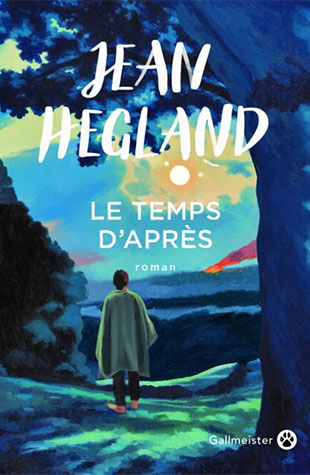
JH: Me too! [Laughs].
DP: We will just wait. We’ll have a little patience—not too much patience, but I would wait. And it would sure be worth it.
JH: Thank you.
DP: So, I’m thinking about Into the Forest, and while some readers see Into the Forest as a dystopian narrative, others really read it as a utopian narrative, so I want to ask: what are your own thoughts regarding this question, and what direction do you think the sequel leans?
JH: Yeah. Thanks, I appreciate that question. I do not see it as dystopian. There’s a dystopia happening beyond the scope of the book that has caused the situation that the sisters are in, but although their situation is at times dire, and although the privileged American lives that they were born into become more and more clear aren’t the lives they’re going to have, I don’t think of what happens to them as a dystopia. Utopia doesn’t quite fit either, you know, because I think our notion of utopia is happily-ever-after, and the end of that novel, for me, holds a hard-won hope. You know, I think there’s some hope there, but there’s definitely lots to worry about and lots of questions, which is, I think, more like life, right?
DP: Yeah, it is more like life.
JH: And so I think it wasn’t as much about imagining all the horrors or all the perfections of some other world but just questioning. For me it really is a legend or a fable, a metaphor for how might we rethink our relationships to the natural world. You know, not that we’re all gonna run off and live in tree stumps, but wherever we are, I think we need to remember that everything we have and everything we come from is thanks to the natural world, thanks to this Earth. And so, rather than predicting a dystopia or suggesting a particular utopia, it’s just that questioning, you know, how we’re thinking now.
DP: Yeah.
JH: And in this sequel, it’s told from the point of view of—there’s an inevitable spoiler to those who haven’t read Into the Forest—but there’s one character at the very end of the book who’s a baby. And it’s told from the point of view of this character fifteen years later. And the only two people this character has ever known are his two mothers. They have this sort of very rich and very challenging and demanding and sometimes dangerous life. He’s been steeped in stories, because his mothers are storytellers and they’ve, you know, revived an oral culture, so he’s steeped in stories. He’s deep into The Hobbit. His experience has affected everything, even his language. So he speaks this kind of very raw and poetic language that is not nearly as demanding as some languages in novels, but it’s a little bit slammed. And he’s inadvertently created a set of gender-neutral pronouns because gender doesn’t have any place in this little three-person society.
All of this to say that if the questions, some of the deep questions that were driving me with Into the Forest had to do with our relationship with the natural world, some of the deep questions that were driving this book had to do with our relationships with other people and what is it we need and what is it we fear and what is it we can give other people.
DP: Yeah, I can definitely sense that having read Into the Forest and having come out at the end where Eva and Nell and the baby are going to into the forest, and you don’t know what in the world is going to happen to them. So now in the sequel, we’re fifteen years into the future with Baby Burl telling us what he’s experiencing, so I’m very excited to hear this, because this is detail I was looking forward to.
And I’m thinking about—at the end of the first book, Nell and Eva seem to have transitioned from adolescence to young adulthood. I mean, there’s this baby. At what age are they when the sequel begins? So Burl is fifteen, so they’re, what, in their thirties?
JH: Early thirties.
DP: Early thirties. So what has changed for them?
JH: Yeah. I mean, in many ways their characters are the same. Nell is still the storyteller, and the story shaper and sharer. Probably the more practical one. Eva has developed this more and more profound relationship with the natural world. You know, she’s continued to express herself through dance, and they’ve worked out a parenting relationship; I mean, they’re the co-parents of this child, and so they’ve worked out a very successful family with the typical, you know, conflicts and disagreements that come with the nature of human families. [Laughs.] And they’ve managed through a lot good luck and, you know, a lot of intelligence and grit. They’ve managed to create a pretty successful life for themselves in the forest. It’s a lot of work.
DP: Oh, yeah.
JH: There’s definitely luck involved, and yet their life is full and rich and meaningful.
Even for speculative fiction, it would be unrealistic and I think irresponsible not to account for climate change. So it definitely is something that gets explored.
DP: I was really worried. [Laughs.] I was really worried about them, so I’m glad to hear they’re kind of okay. I was especially worried about Eva, but I’m glad to hear this. Each of these people started to mean so much to me in the beginning—the father and the mother of Eva and Nell are living and part of this story, and so I’m tilting toward some insights into the book (spoiler), but you didn’t give the family a last name. And I was wondering if that was intentional or maybe it comes up in the sequel, or maybe it was your intention to make these fine folks, you know, every family. Tell me about that—was that intentional on your part?
JH: That question delights me so much! Because after having talked about this book for three decades, nobody has ever asked that question. And I realized that I had never even consciously thought about that question, and so it’s just such a thrill to be invited to think about it now.
DP: I think you were very intentional with the choices of the names of the other characters: the mother—Gloria?
JH: Yeah.
DP: And the father was Robert. Nell, short for Penelope.
JH: Yeah. Waiting and waiting, and then all of a sudden… not. So in retrospect I’m glad I didn’t give them a last name, but I really appreciate having a chance to think about that. Thank you.
DP: That’s so cool. Well, that was something I noticed. Also, is it okay if we talk about fire?
JH: Sure!
DP: Because in the past decade and some, in part because of the climate crisis, fire has become hard to even speak of, but it’s a formidable antagonist in many narratives and in the ecological and psychological landscapes of the region where your books are set. And you might have some personal experience with that as well, but can you talk about the role fire plays in your fictional narrative and what it offers in terms of understanding, maybe, our relationship with fuel and fire? And I’m thinking about the end of Into the Forest, but…
JH: Yeah. Thanks for that question, I appreciate that a lot and can go a lot of different ways with it. I mean, Into the Forest ends with fire; fire becomes significant also in Here in This Next New Now. And actually, I—may all the gods help me—I find that the book I’m writing now is revisiting some of this again, more, and fire becomes even a larger part of it. And for me, for all kinds of interesting reasons, I mean, fire is more and more and more a significant part of certainly our west coast experience. My husband and I lost the home that we’d lived in for thirty years in the forest that had been the inspiration and the settings in many ways for these books to fire in 2020, and so fire, you know, came very close to my own life.
And then, it’s really, really interesting, the reading and research I’ve been doing about fire. You know, there’s a lot of speculation that says that it’s really fire that made us human, because once we figured out how to control fire, that means we could come down out of the trees, so we had a different relationship with our bodies. We were able to live in groups, because we were grouped around fires. It meant that communication and language would be developing, you know, in much more specific ways because we had this kind of central fire. It changed our relationship maybe even in terms of sleep cycles. I mean all of these really—fire is a big deal in human lives, and it’s—with climate change, it’s well, it’s global, right?
DP: Yeah, it is.
JH: The mega fires around the world are new in human experience, at least.
DP: Are we brought into that situation in the sequel at all or are they dealing with other kinds of realities in their setting?
JH: So, you know, when I wrote Into the Forest, I was in the lucky and naïve position of not really having to account for climate change. I mean, that was thirty years ago, right? And so the scientists had been telling us for a hundred years that human activity was changing the climate of the planet, but we hadn’t experienced it. We hadn’t been aware of experiencing it directly, and we were still in this kind of naïve denial of saying, “Well, maybe it’s affecting the planet, but it’s going to be decades, centuries from now. Maybe our great-great-grandchildren will have to deal with it, but we’ll have it figured it out by then.
DP: [Laughs.]
JH: And at this point it would be, you know, even for speculative fiction, it would be unrealistic and I think irresponsible not to account for climate change. So it definitely is something that gets explored.
DP: Over the course of the first book, your characters change a lot, but Nell is particularly moving from intellectualism toward intuition and self-reliance. Not that she has a lot of choice. And she’s self-determined, I think; they’re having to learn to adapt, do things like forage and embrace the instincts they literally need to survive. And Eva too is learning the importance of, say, mutual dependence, partly upon her sister, her strengths. And she needed to have some resilience in the face of loss too, and so both of them have been letting go of the past and embracing change, finding a new sense of purpose and identity in some ways.
So, in terms of the sequel, I think we were headed here: what do you think the characters learn now, or what is their opportunity now? Where before they were learning how to eat, how to stay healthy, how to have a baby—they were learning all of this. They had to use some amount of instinct to become parents, because it’s not like they hauled a bunch of parenting books out into the forest with them; I think they only took one or two books. But they were having to learn how to be parents, and I’m assuming they’re having to learn how to be together, and it sounds like they’re isolated.
JH: So I think they’re learning all those grown-up things about how you [laughs], how you: “Oh, this is it. This is my life. How do I make the best of it? How do I find my own personal meaning and connect with the people and support the people around me? How do I stand up for myself?” You know, all of that sort of stuff, and I don’t know, I think however many childrearing books you read, it’s instinctual, right?
DP: Yeah, I would imagine. They were on their own when the baby came, and they had to do all kinds of things in order to keep the pregnancy healthy, and then they had to have this baby together. I can’t imagine being stuck with my sister and my sister needing to deliver a baby, and me having to see that through. I mean, what do you do?
JH: You do it! And the thing that they’re being really confronted with during the current time in the novel is Burl is an adolescent. And I think like many, many, many adolescents, even those of us who have been lucky to have come from relatively un-dysfunctional families—you know, you’re looking for something wider and larger, and so one of the tensions in the book is they have been damaged enough by their experiences with human beings that they want to—they’ve discovered ways to be happy in the forest. And he has been steeped in stories and is fascinated by, you know, larger—and so that question is one of the interesting conflicts in the book.
DP: Well, it occurs to me too, you know, technology at this point—it’s not like they’re in the forest with their iPads and their phones and their smartphones. And Burl is a teenage male in the forest with no technology to speak of—at least, I would guess that. And I know that in the first book Nell was really geared to develop a future for herself around success as a learner and an intellectual, and she was online and getting ready for college entrance, and all of that infrastructure, all of that internet—which you were writing about at a very early time—and we can talk about it later, but in the film, when they produce the scene with the family and the technology they were using, it was unbelievably thoughtful and came in such a realistic way, and then it all goes down. It all goes down; they have nothing. I mean, somehow not even radio. And so now I think it’s very likely that things have changed—their dependence on technology. So what is your thinking regarding technology, and how are you discussing it in the stories?
JH: Yeah, I mean that’s a huge question for all moments right now. And of course we have to remember that a knife is a technology, you know? A fire-starting kit is a technology; I mean, we’re technological creatures. These days I think when we talk about technology, we’re talking about the electronics and our phones and our laptops and our computers and AI and all of that.
DP: And AI, yeah.
JH: And given the current administration, you know, and Musk and all that monstrous stuff, and I don’t think that there’s any hope that there’s going to be thoughtful conversations about/around that, but I think that we desperately need them. You know, I think about some of Ursula Le Guin’s speculative work and how in these societies, these rich, full societies that she was imagining—you know, there was a place for technology, but it really wasn’t part of everyday life in the same way. You know, it could help us be healthy, it could help us communicate in certain ways, but daily lives were lived close to home. And to me that seems like a pretty darn good model. You know, I’m talking to you right now thanks to antibiotics—I had pneumonia—and I don’t want to give that up!
DP: And we’re having this conversation via Zoom because we don’t live in the same place!
JH: Which is just a wonderful thing! So, I just wish that as a culture we could think a lot more deeply and carefully about when and where and how we use those technologies.
We’re hardwired to stay alive, and part of that, it’s like we’re not very good at determining when we’re being greedy.
DP: I love your answer to this question because it is such a struggle to: Do we stay in? Do we get off? Do we leave it behind? Do we not touch it? So I really love your answer to that question. There was a moment in Into the Forest—this is when Nell realizes that they’re not going to be rescued. And I still feel really centered around that—when I realize we’re not going to be rescued by anyone. Not by any particular being with whatever kind of power we think they have. This is so important, and your answer to the technology question has something to do with that. In current times we still have support; we have antibiotics if we’re fortunate. We have access to these things: we have firefighters who come to put out the fires, and a lot of people in our region have access to medical care and whatnot, but I wonder what we might learn from your characters in Here in This Next New Now. By the time they’re here, what are they teaching us, and what are you teaching us specifically about the future? “Take what you need” kind of things.
JH: Yeah, we’re hardwired to stay alive, and part of that, it’s like we’re not very good at determining when we’re being greedy. And I think part of that is a really healthy drive—we’re trying to take care of ourselves, trying to take care of our families, and how do we, you know—why can’t these obscenely wealthy monsters who are ruling America right now realize they have enough? And I think it’s that: “where does need turn into greed?” And I think that’s a question for all of us to ask.
And connected to that question is the question of community. Right, because you’re talking about the firefighters that come to help us, and the doctors that some of us are fortunate enough to have access to, and those are ultimately questions of other human beings showing up.
DP: When you say the word community, I feel very hopeful, and I think that that’s all we have. I think about it all the time now. If we needed to enter the forest, it’s going to be with these people I can see—from my house I can see that house and that house, and these are the people we’re going to be with. I’m not even going to be with my family, who live in other states! You know, these are the people we’re gonna be with, and Nell and Eva have each other, and that can be enough too. By the way, I’m thinking and I’m excited to learn more about what’s happening with your characters. I think there’s so much truth in that about what we have being community and those around us.
JH: I’m currently—[laughs]—it’s party research and partly just because it’s interesting to me, but I’m taking an online survival skills workshop taught by this woman who’s really knowledgeable and really wonderful, and there are sort of two different versions of survival skills, right? There’s the survivalists who are like, “When the shit hits the fan, I’m gonna be there on my front porch with my gun and shoot down everybody.”
DP: “Protecting my generator.”
JH: Right, right. And then there are people like this group, who are like, “The first survival skill is community.” Right? I mean, that’s the first thing. And we’re not going to survive by ourselves; we’re going to survive as a community with each other.
DP: Again, when I read Into the Forest, and there are other books that we could talk about that are giving us lots of insights: all the Octavia Butler, all of her books are pointing to the now—this is the new now. So we’re learning, we’re teaching ourselves these things. I did not learn these kinds of things from my mother, because she was not concerned with these things. Like, “How am I going to feed myself if there’s suddenly no food, healthy food in the grocery store?” My mother was not concerned with that. But I’m thinking about the mother of Nella and Eva, of Gloria, who does not, is not with us at the end of the book. So I wonder if she has a presence in any form in the sequel—spiritually or otherwise, or does she come up in their memories, or…?
JH: You know, it’s kind of a shame, but not so much. You know, I think Nell and Eva, their parents were very eccentric, but in many ways they won the parent lottery—their parents loved them. And so of course they didn’t have to do what many new parents do, which is figure out how to love their children in the ways they weren’t loved themselves. They had that first and magnificent gift of they knew what it felt like to be loved as a child, and so they were able to access that as parents. Beyond that, I think they were young enough when they lost her that, I mean, her legacy lives on in Eva’s dancing, her legacy lives on in a really profound way because it was the book about natural plants that she was using to make the dyes for her fabric art, her tapestries, that they ended up using for the much more practical reason of figuring out which plants were edible.
DP: That was one of the books or maybe it was the only book they took with them. Maybe it was Tolkien and…?
JH: No, this is a beautiful CALYX story, can I tell you this story?
DP: PLEASE!
JH: Oh god, so when I wrote the book, when I wrote Into the Forest, I thought, “Okay, they are gonna burn the house, and that means they’re gonna burn everything. Everything is gonna be gone except the few little things that they can carry with them. And they’ve got some stashed food by the stump, you know, so they’re not going out, like, Alone—that the TV series Alone where there’s absolutely nothing—they have a few things. But they’re gonna burn the house, and everything’s gonna go.
CALYX bought the book, and it was in production, and I got a call from Margarita, and she said, “You can’t burn all the books.” And I’m like, “I’ve gotta burn all the books! It’s not fair not to burn all the books, I can’t cheat, I’ve gotta be honest about this.” And she’s like, “You can’t burn the books; these are readers reading this book! You can’t burn all the books. Please, I beg of you, don’t burn all the books.” And I was like, “I have to burn all the books,” [laughs], and she puts together—this was long enough ago, this was a big deal to put together a group phone call—
DP: Oh sure, like a conference call with multiple people. I remember those.
JH: —with the editorial staff. So it was like Micki Reaman and Teri Mae, and so all this, and everybody’s on this phone call, saying, “Jean, we beg of you, you cannot burn all of the books.” And I’m like, “They’re going into a stump. It’s gonna be wet, it’s gonna be hot, they’re gonna be… I gotta…” And they’re like, “Please, please, please,” and I said, “Okay, okay, okay, I’ll think about it.” And I hung up and I went for a long, long walk in the forest.
DP: Wow.
JH: And I thought, “Okay, I’m gonna bring each—Nell is gonna decide to bring one book for each of them. And so three books. And of all the books on her bookshelves, all the books that she loved, she chooses the plants book, the really practical [one]. She chooses a book, it’s actually a real book by Heyday Press: Stories and Poems of Indigenous Californians. And then the Encyclopedia Index.
DP: Right! The Encyclopedia Index.
JH: Index! So it’s worthless as a book, but anyway. Bless CALYX, because they were right.
DP: That’s fascinating. Was it Teri Mae Rutledge, probably?
JH: Yeah.
DP: And Micki Reaman, Margarita Donnelly. I wonder if Beverly McFarland—
JH: Beverly was there! Beverly was on that call.
DP: I think it was good advice.
JH: No, I think they were absolutely right. I think it’s a richer book for that extra twist.
She’s like, “You can’t burn the books; these are readers reading this book! […] Please, I beg of you, don’t burn all the books.” And I was like, “I have to burn all the books.”
DP: It would be. And you’re a curious writer, which I’m sure is one of the many things that makes you brilliant. We’re at a point where I’d like to talk a bit personally about Nell as a character and an inspiration to you as a writer, and then I wonder: who is she to you? And also, do you meet other women who remind you of her?
JH: So, when Gustave Flaubert, after he wrote Madame Bovary, because he was 100% not like Emma Bovary, right? He was a sort of Parisian gadabout or whatever, and she was a provincial doctor’s wife, and you know, just totally different worlds, and everybody was like, “Who is Madame Bovary? Who is she?” They were convinced that he was basing this character on a living person, and he said, “Madame Bovary? C’est moi.” I’m Madame Bovary.
And I think there’s a way in which, you know, all of our characters are sort of parts of us with extra parts added on. It’s definitely a pastiche, and certainly Gloria and Robert, the parents, I had models for out in the world that I was building them off of. But Nell is probably the character who is closest to me, you know, that love of books and living in her head and needing to control things and all of that. That’s another way that Gloria kind of lives on. You know, but Eva’s definitely part of me too, though when I was in sixth grade my ballet teacher told me I needed to find something else to do! [Laughs.]
DP: Oh! Okay, well, that’s encouraging. Now, Eva is really different than Nell, and I think that was a really great way to build them up for us. But she’s very strong as well, but just in a really different creative mindset, less practical—it seems. But she kind of steps up in the critical moments in the novel, and you told us a little bit about who Eva is now in the sequel, so I can worry a little less about her, but I think that’s just wonderful. Of course Nell is you, and you are Nell in so many ways. It’s really significant that you’ve written such strong female characters. There are men in the first book, and I’m wondering about the sequel, but what are we learning about men and the future and men in your novels? I mean, there’s also the question of why did you make Eva’s baby—Eva’s and Nell’s—why did you make the baby male? You could have done anything.
JH: I actually had an early reader, a guy, who read a draft and suggested that I make the baby a girl because, you know—for me, it’s very much a feminist book, and there are these strong female characters, and it’s about women taking care of themselves and taking care of themselves in what has been traditionally been a male-dominated kind of landscape. And so he said he thought the baby should be a girl. And so, you’ve seen, I took that to heart, and I wrote a draft in which the baby was a girl, and it just felt so closed-down. We need men! And we all need to discover kind of new and larger and saner and more honest ways of being. And it goes way beyond gender, I mean, we need men and we need non-gendered people—we need that whole human spectrum. And in one tiny little way, I wanted that in the book. And then, thank goodness I did that, because in this next book, one thing that this next book really has a great chance to explore is questions of gender. And that would have been a much more dead-end [laughs].
DP: Right, you couldn’t have gone there really.
JH: Yeah.
DP: And also, I have to ask: does Eli come back into the picture? Because he was the boyfriend, Nell’s love. You don’t want to say! [Laughs].
JH: Yes and no. He has a significant presence.
DP: Oh wow, okay.
JH: In some ways. Let me put it that way.
I think there’s a way in which, you know, all of our characters are sort of parts of us with extra parts added on.
DP: Okay, cool, that’s great. Good to know—I’m very, very curious about that. So let’s talk about taboo and the scene, if you want to consider it taboo, the scene in Into the Forest that, as I did my research, I had a different opinion, but some readers have a reaction to, and some readers found absolutely unacceptable, controversial.
So this would be another spoiler for anyone who hasn’t read the book, but about midway through the novel, something very terrible happens, and Eva is attacked and raped. The description of the attack is visceral, but you as the writer didn’t leave it behind right away. You did not veer away from it, and I’m gonna talk about this a bit. First: what was your intention in showing the healing process, or was it really something more?
JH: Yeah, I mean, at that point in the book the girls have just been waiting for things to get better. And then this kind of most horrible thing happens. They’ve felt essentially safe in the forest because there’s no people around, and then somebody shows up and rapes Eva while Nell isn’t around to protect her or witness it. I mean, that’s such a desperate moment. To write the book that I wanted to write, there had to be ways for both of them to move beyond that desperation.
And one way of doing that is that they found themselves in the garden—they found themselves planting and tending the earth and making that kind of initial connection with the earth and growing and all of that. And then this is the moment that upset some readers—not nearly as many as it might—I’ve been really gratified that that’s not the case—but there’s a moment when the sisters make love. And very shortly after Into the Forest was first published, I was being interviewed by I think an Oregon newspaper or something, and the interviewer said, “So I understand this is a book about homosexual incest?”
DP: Oh boy.
JH: And I literally for a moment thought, “They’re confused. They’re thinking about the wrong book.” And then I realized, “Okay, very literally, that would be a way of describing that one tiny moment.” It’s not—
DP: It’s a moment.
JH: And it’s not described in the book. But then I realized, “Okay, so, the homosexuality of it doesn’t bother me at all. I think it’s really important that we see lots of different versions of the expression of love.” Incest is a-whole-nother matter, because incest almost always means that somebody is in a position of great responsibility has taken advantage of that responsibility, and so somebody in a very vulnerable position has been hurt by exactly the person who should be supporting them—a family member.
In this case it seemed as though those two sisters were coming together as equals and they were both, you know, it was both a moment of consent. And there’s a sentence later on in the book where Nell is talking about how they’ve created a little ritual before meals where they hold hands and experience a moment of gratitude, and she says, “That’s the only time we touch.” And so for me, I was imagining that they were in such a desperate situation, and they didn’t have counselors and therapists and other—they had no other way. They didn’t have the sort of support you would hope someone would have available after a rape. And once you’re feeling that kind of desperation, it was crucial that they rediscover the physical joy of living.
DP: Yes. Yes.
JH: So that was what I was imagining.
DP: I can’t believe that I get to talk to you about this personally, because as a reader of the book with nowhere to really go with it—you know, I wasn’t part of a book report or anything, I thought, “Well that’s really interesting. You don’t really see that much, and now can I recommend this book to my younger sister?” And I thought, you know, of course, but even then, and as I went back to do research before I got to talk to you, I saw some people exchanging comments on this moment in the book.
JH: Oh, interesting.
DP: Nobody ever mentions, nobody ever describes or is opposed to this description and interaction with the rape. They’re not horrified by the rape! The attack. The violence. They’re horrified by a caring, a certain type of caring for each other.
JH: Thank you so much for—I really, really, really appreciate that insight.
DP: Yeah, I mean, you point out that they had no other support. A body after trauma—what does it need? And I think that instinctually, between the two of them, what was needed was found, and that’s what it was. So to be up in arms over that is sort of beyond me.
Very shortly after Into the Forest was first published, I was being interviewed by I think an Oregon newspaper or something, and the interviewer said, “So I understand this is a book about homosexual incest?”
JH: Do you have a moment—can I tell you a little bit about the filming of that?
DP: Please! Please, absolutely! So this is the movie…
JH: The movie came out in 2015.
DP: Okay, so a bit later.
JH: A bit later.
PD: Elliot Page and Evan Rachel Wood.
JH: And Patricia Rozema, who’s a Canadian director, was the director. And I wasn’t involved in the making of the film at all. My first experience of it was showing up at the Toronto Film Festival for the premiere. But just before I did that, I got a call of Patricia Rozema, and she wanted to kind of explain those aspects of the book.
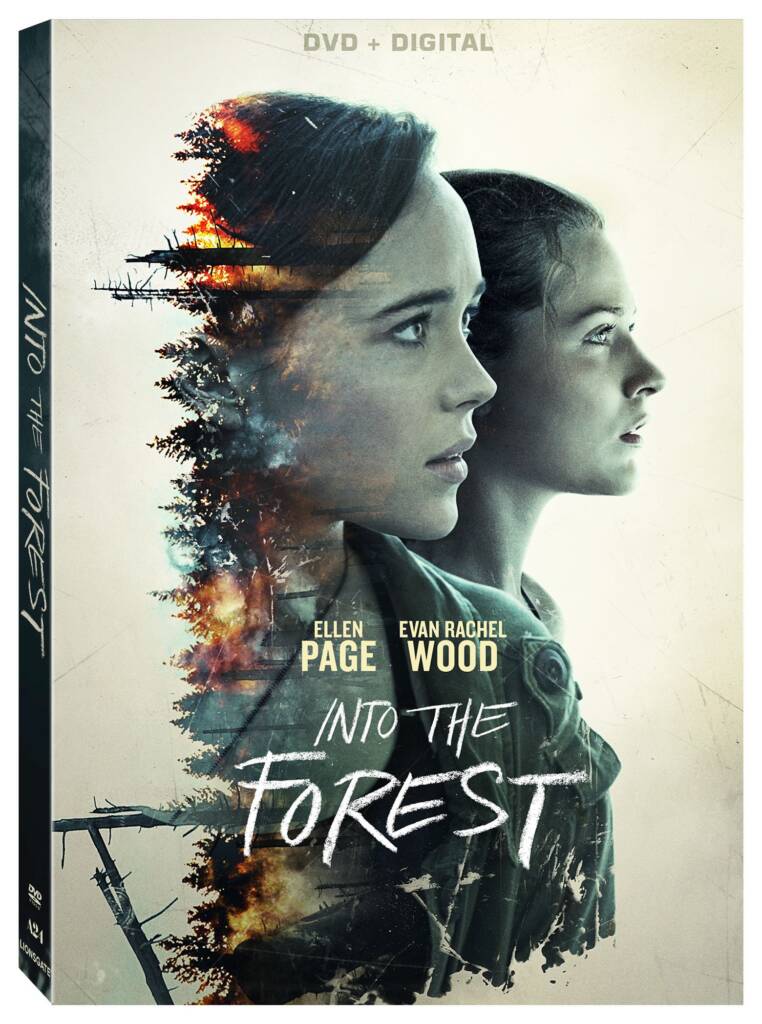
And the first thing that she said, and if anybody watches the film, I think it’s a really powerful moment in the film, is that it’s really, really, really easy in film to sexualize a rape scene because it’s sex and you’re seeing this beautiful body, and so she said they were very careful to only show Eva’s face. So all that you see during that horrific violence is the response—her face. You don’t see any of the, you know, her lovely body or, you know, any of that stuff.
And then Patricia said—it was a huge apology—she said that they had filmed the love scene, and you can imagine how beautiful that would have been, you know with Elliot Page and Evan Rachel Wood. It would have been a magnificent moment, but she said they realized there was no way they could include it in the film because if a love scene appears in a film, the assumption, the implication is that it’s an ongoing relationship.
DP: Ah.
JH: And there was no way. In the book, Nell can say, “That’s the only time we touch.” There’s no way in a film without that first-person interior narrative to make that clear without the two sisters agreeing that they weren’t going to do that again. Which implies a) that there was something wrong with it and b) that they want to.
DP: Right. Got it. Yeah.
JH: I thought that was just such an interesting insight into, well, the difference between film and literature.
DP: Absolutely. And I’ve seen the film, and I do remember getting a sense that they had, after the violence, after the rape and she experienced all this violence, and Nell wanted to be able to help her. You could see that. I think it was a really good film. Of course I had to see it because I was so in love with the book and I just wanted to.
So when you’re at the end of the first book and about to begin the second, we’re starting to notice that the things that we place so much value on might not be very helpful in the near future—like the internet or gasoline, a lot of things. So Nell and Eva, they’ve become really resourceful by now. They’ve done everything—they’ve cured meat, they make their food so they can eat it later and store it, and they’ve learned to make tea. I will never think of tea the same, by the way. Never never after this book. So they become resourceful, admirably so, but in the end, they really leave everything behind that we’ve talked about—they take very little. So why was it important for Eva to have the idea? Why is it Eva’s idea and not Nell’s idea to burn down the house and everything in it? They’ve forsaken all the things, so why Eva?
JH: Yeah. Well, because Eva is the impulsive one. Eva—she’s creating a much more natural and visceral relationship with nature. Nell is still more practical. And Eva was the one who was raped. And this is—I really, I had to work hard to earn that ending. [Laugh.]
DP: You did! It was earned. It was so earned. It was like—yes! I wasn’t thinking, “Don’t do it, it’s still a shelter!” I was just thinking, “Yeah, of course, burn the whole thing down. Burn it down.” And I was so happy for her.
JH: Yeah. And there was that threat of—there were footprints. There was the threat of somebody coming back. And if there’s no house there, it’s not the—what do they call a swimming pool in somebody else’s backyard? Malicious nuisance? It’s not going to be drawing people in.
If someone gives you a gift, a) you feel gratitude, and b) you want to reciprocate. And if we can think about our relationship with the natural world like that, it just changes everything.
DP: I want to ask you one or two final questions and then invite you to add anything more you’d like, but as readers, we learn so much from all the writing that really reflects contemporary anxieties through speculative lenses. We’ve got really incredible authors like Louise Erdrich, Leni Zumas, Naomi Alderman—I already mentioned Octavia Butler, Margaret Atwood. They’re each distinct, and yet they’re giving us stories in a sort of tragic way that validates the experience of women, presently. So I wanted to ask you: how do you see yourself as a contributor to the genre? Who are your influences, if you have them? And where is your focus in what’s guiding you?
JH: My book’s entering into the conversation. And I’m just really honored and delighted to be part of that conversation, because I think it’s so important, you know, women’s experience and women’s roles and who we can be if we’re allowed to be everything we could and should and want to be, and how that frees men and people of other genders, and I think those are just wildly important questions. And given the ugly turn that our politics and society are taking right now, I think it’s just unbelievably urgent. I think that many of us had some sort of naïve idea that we weren’t beyond all of that but that we were heading in the right direction. And now, obviously, we’ve just got so much urgent work to do, so I think that’s super important.
In terms of my influence—I’m just influenced by everything I read, just constant conversation. I’m trying to think—so recently I’ve been reading some wonderful nonfiction, like Robin Wall Kimmerer’s latest book, The Serviceberry. And the ultimate message has to do with how in her culture people think of what we get from the natural world as gifts and not—because we talk about natural resources, and we talk about, you know—we use exploitative terms. And if someone gives you a gift, a) you feel gratitude, and b) you want to reciprocate. And if we can think about our relationship with the natural world like that, it just changes everything.
I think my final comments just have to do with an amazing organization CALYX is and has been. I mean, how many people got their start at CALYX, being published by CALYX, and how many people just treasure the journal and the publishing and the support. And I know when Margarita and the founding mothers began it, they had the idea that it was only going to be necessary for a few years, right?
DP: Yeah.
JH: And here we are, fifty years on, needing, alas, as much as ever. But there you are! Doing this amazing, important work. I mean, I really owe my career to CALYX. I know I’m not the only person to say that, so I just—this was such a pleasure! Thank you for all your questions. I look forward to more, and in the meantime, thanks for all the time you gave me this morning.
DP: Oh my gosh, thank you. Thank you, you’re so welcome.
Debbra Palmer is a writer from Portland, Oregon. Her work appears in journals and publications, including CALYX Journal, Portland Review, Cream City Review, Pretty Owl Poetry, Passenger’s Journal, Northwest Review, Prairie Schooner, and The New York Journal of Books. She holds an MFA in Poetry from Pacific University.