2011 Lois Cranston Memorial Poetry Prize


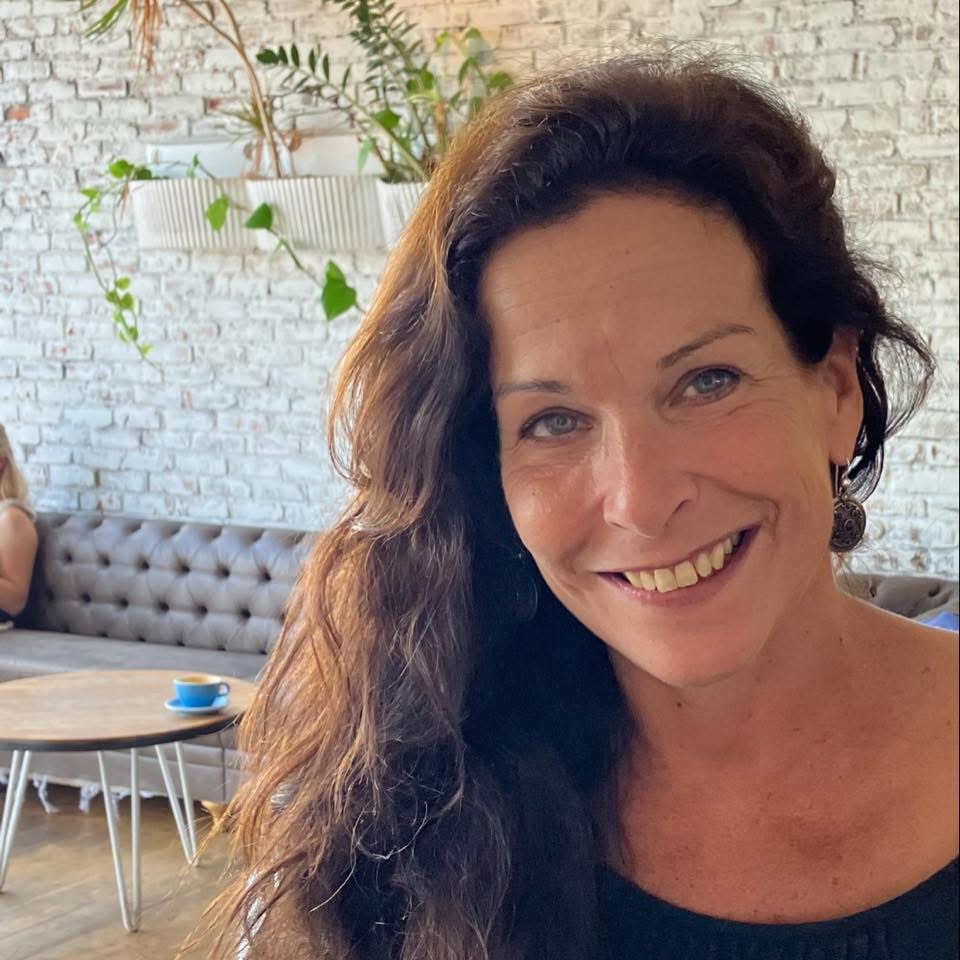
CALYX Journal is pleased to announce that Bethany Reid of Edmonds, WA is the recipient of the 2011 Tenth annual Lois Cranston Memorial Poetry Prize. Her winning poem “The Apple Orchard” will be published in CALYX, A Journal of Art and Literature by Women, Winter 2012, Vol. 27, no. 1, and she receives a $300 cash award.

Bethany Reid’s poetry has appeared in the pages of CALYX numerous times over the past twenty years. Other recent publications include The Sun, Superstition Review, Blackbird, Pontoon, Crosscurrents, and Stringtown. She teaches creative writing and American literature at Everett Community College, and blogs at awritersalchemy.blogspot.com. She lives in Edmonds, Washington, with her husband and three daughters.

The final contest judge, Sidney Wade, is the author of five collections of poetry including Stroke, Celestial Bodies, Empty Sleeves, Green, and Istanbul’dan/From Istanbul (published in Turkish and English by Yapi Kredi Yayinlari, Istanbul). Wade received a Fulbright Fellowship and was a senior lecturer at Istanbul University. She served as President of the Association of Writers and Writing Programs (AWP) from 2006 to 2007 and is currently the poetry editor of Subtropics.

The three poets receiving an Honorable Mention for their work are Beth Ford of Portland, OR for her poem, “American Singles,” J. Angelique Johnson of Mankato, MN for her poem, “The Holstein,” and Amy Schutzer of Portland, OR for her poem, “February.”

Amy Schutzer lives in Portland, Oregon. Taking the Scarecrows Down, a chapbook of her poetry, was published by Finishing Line Press in July 2011. Her poetry has appeared in a variety of literary reviews and magazines including Portland Review, Fireweed, HLFQ, Sequoia, and Hurricane Alice. Her first novel, Undertow (CALYX Books, 2000), was a Lambda Book Award finalist, Violet Quill Award finalist and Today’s Librarian Best of 2000 Award winner. The Color of Weather, her second novel, was a Finalist in 2010 Leapfrog Press Fiction Contest. She is the recipient of an Astraea Foundation Grant for Fiction, and a grant from the Barbara Deming Memorial Fund. While publishing her 2nd and 3rd novel remain on the horizon, she is hard at work on a fourth novel, and always, poems.

J. Angelique Johnson grew up in the foothills of Colorado where she draws much of her materials.  Her works have appeared in Mason’s Road, Fairfield University Online Literary Journal, Soviet Peaches: a Literary Magazine, and she has been a recent recipient of both the Minnesota State Arts Board/Artist Initiative Grant and the PLRAC/McKnight Emerging Artist Grant.  She lives in south central Minnesota with her husband and two children, and if she's not reading or writing, she's teaching it. 

Beth C. Ford lives and writes in Portland, Oregon. A graphic designer, photographer, traveler, poet, and essayist, her work has been reviewed locally and nationally. She designs and publishes poetry chapbooks, cards, and broadsides through her business Glib Communications of Portland (www.glibcom.com).

__________________________________________________________________________

 2011 Lois Cranston Memorial Poetry Prize Winning Poems

2011 Lois Cranston Memorial Poetry Prize Winner


THE APPLE ORCHARD


Spring mornings

it was a regular whorehouse

of an orchard, the trees

frowsy and bedraggled

in nightgowns and slippers,

hair tangled, lipstick askew,

straps slipping from their shoulders.

It was spring and then

it was high summer,

green apples so sour

and hard I had to recoil

without a bite. The names

were Gravenstein,

Transparent, King, and Chehalis,

some of them pie apples,

some that could last all winter

in a box in the pantry,

some good only for eating

fresh from the tree.

The cows came into the orchard

in October and ate

the windfalls, ate until they

were drunk on apples.

The deer came, raccoon

and opossums. The trees

didn’t care who used them.

They were perfectly promiscuous.

November with its sharp teeth

stripped them bare.

Bethany Reid

2011 Lois Cranston Memorial Poetry Prize Honorable Mentions


AMERICAN SINGLES

Have your seen me on the back of a Borden milk carton missing since 1967 last seen Woodside California wearing no shirt under a favorite yellow rain slicker and denim blue Keds with tangled laces and one blood-stained bobby sock squatting down to pull a leaf from a milkweed thistle to watch the sticky white sap ooze from the stem and wondering what baby drinks this milk and in the elfin creek beneath the towering redwoods fishing with kite string a safety pin and a slice of orange Kraft American Singles cheese and once catching a little minnow and heartbroken learning that I was killing it with air and it would never swim again and I only wanted to get closer to its tiny silver and to know how it felt to touch and not comprehending why the pink and brown earthworms appeared in November’s clear rain puddles and would struggle and swell and drown and could not save themselves and broke apart too easily why ever would they leave their homes in a storm and late summer searching in the barn loft for banty eggs among the golden bales of oat hay and sweet musty alfalfa accidently uncovering a mouse’s nest and in the fur-lined tea-cup nursery the so small naked sightless translucent babies learning now they all would die because the mother would never return because I had touched them and left my deadly human odor on them The regret and sorrow of the world overwhelmed me then before ever I understood the regret and exquisite suffering in my mother’s eyes and her terrifying wish to die if you see me tell me that sometimes the Crackerjack box simply doesn’t have any prize inside and no one really knows why but they pretend they do and I will tell you that there is no god because I wept and pleaded begged and prayed and he never came and I will tell you that if you catch a blue-bellied lizard by the tail on a sunny Sunday spring morning on your hands and knees beneath the blooming oleander bushes that line the road despite all the love in your heart it will tear off and you will have no lizard but a little meaningless blue and bloody piece of meat in your hand but the blue-belly will grow a new tail in time because god comes to him on the pine tree bark where he spends his days wary of the red-tail hawk and a little girl who just wanted to know what it felt like to touch God is a dream the lizard dreamed and the blind mouse pup is growing cold and the red-tail soars over the cathedral woods pretending to understand a piece of kite string tangled in its claws.

Beth Ford


THE HOLSTEIN


Years before my water broke

my husband reached both arms

inside a bellowing Holstein –

his t-shirt streaked

with piss, shit and blood –

and pulled out a calf.

It splashed dead

into the spring mud, white

eyed, flesh blue, dung-pile flies

quick to gather. Damn, he said.

He hosed himself off, untied

the Holstein from the gate

and led her to the barn to be milked,

the dead left glistening in the yard.

Eight years later I pushed

into the twenty-fifth hour, legs spread

for another man to stretch apart

my cervix, reach inside, turn

the writhing child within

as I pissed, shit and bled.

My husband went white faced

and sallow cheeked

not for what might come out,

but – as he would later say –

for not taking the .22 to the crows

that had wedged their beaks

into the calf’s meat

with its mother at the gate,

lowing for the dead exposed.

J. Angelique Johnson


FEBRUARY


a brooding month

sitting on its days,

the Edgeworthia peeps with its waxy

clusters of trumpeting flowers,

and even though the daffodils rise,

it is a slow reclamation from winter;

we cling to the inside of out houses,

we watch too much T.V. and have our judgments—

              it is a national disease,

this lean towards divisiveness and fracture,

so the Daphne is a comfort

on my way back from squashing the newspapers

into the bin

to be recycled into more debilitating news.

The wind loosens a few plum blossoms.

The sun is busy glossing over the dusk.

Who can say why I looked up when I did,

it could have been happiness from disposing

of the unstoppable news

and then above me

flying across the darkening yards,

a heron on its way somewhere, unreported,

and without a slurry of opinions,

it will land and rest in the deepening blue.

Amy Schutzer