
PERSEPHONE’s TESTIMONY, Sibyl James. Bainbridge Island Press Bainbridge Island, Washington, 2026, 36 pages, $5 digital, https://bainbridgeisland.press.
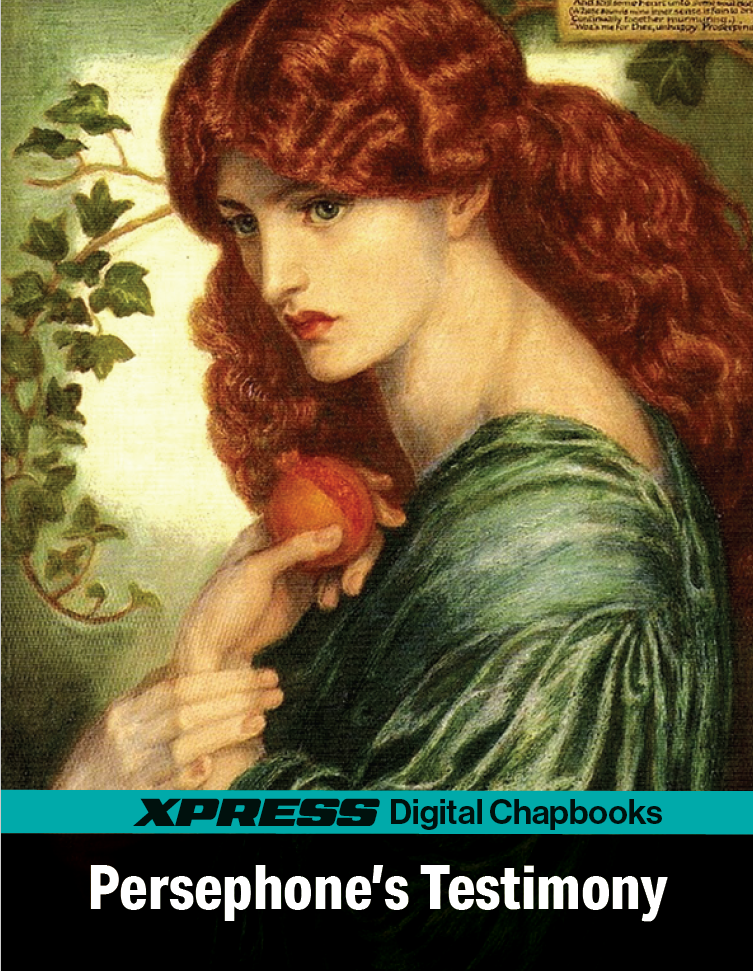
Greek mythology is a tough place to be a woman.
Medea, Antigone, Medusa—jilted, gaslit, transformed into an inhuman monster—yet Persephone’s tale of imprisonment and incest, followed by aching tastes of tiny freedom, may just be the rotten pomegranate.
Sibyl James’ latest poetry collection, Persephone’s Testimony, is a biting and witty juxtaposition of the myth and contemporary womanhood, poetry of parallel lives separated by millennia but connected through shared experience.
Hierarchy, gender dynamics, perseverance–the song remains the same for independently minded women throughout history. Expressed as mythological figures and everywomen, the Persephones of these twenty-one poems are fantastical and pragmatic—farm and kitchen hands, figures of force and fertility in Hinduism and Ancient Egypt, a cavalcade of the powerful and the powerless. James expertly repurposes what goddesses do best by having her Persephones frolic, commune with animals, be gracious in the face of ingratitude, and partake in multiple bodies of water for pleasure and meditation. Both watching and affecting the narrative, they play contradictory roles in their respective worlds as warriors, healers, explorers, and caregivers; in other words, they just can’t win, but after a lifetime of being second-guessed, it only feeds the fire of dissent in these gritty goddesses:
I watch the colors of me rise, suck air clean as a thin reed
of eucalyptus breathed under my tongue.
My skirt swings, my heels ring on the path
in all directions, a light rhythm of horses,
day struck, mountain wild.
(“Persephone in Spring: An Incantation for Rising”)
Color is expertly splashed across this brisk but bountiful collection—strong feelings can arise from a particular shade of clothing or beauty accessory, and everyone except Persephone is allowed to define, own, her femininity. Permeating the collection is this burning theft. Sometimes intellectual, sometimes physical, something is always being stolen, permission denied–consent: non-existent. But being a Persephone is about turning prisons into platforms. Clothing, color, the body, every instance of reclamation becomes an act of rebellion:
She’s painted her toenails blue.
Not a tentative, timid
robin’s egg spring, not the blue
of the Isle of Capri, the mantle
of alabaster Virgins
in cathedrals,
but electric midnight azure,
neon as Andy Warhol,
as winter in cities.
Her feet make her dangerous,
lacquered as Chinese puzzle boxes,
unfathomed as Tokyo Rose.
Her nails are the rage of Kali, burning
the blue flame.
(“The Blues”)
My skirt swings, my heels ring on the path in all directions, a light rhythm of horses, day struck, mountain wild.
Popular mythology across the globe is rife with immortals and mortals grappling with inevitabilities. Sibyl James’s work is a deep and fruitful interrogation of this conundrum; after all, sibyls were the most trusted oracles in ancient Greece. Amor fati, the love of fate, the pull of the thread—even if you wanted to transgress, will the universe allow it? In vernal pools and greasy spoon cafés, on row boats and at countertops, through winter imprisonment to the conjuring of spring and elemental awakening, providence follows our eponymous goddesses. This collection really shines when James points a keen finger at fate, helping us learn from a destructive past while lending a helping hand to a defiant future. Here our goddesses stand, not taking shit from anyone, resisting pervasive gender bunching, personality foisting, and silent suffering. Yes, Persephones are prisoners, living a life of uneasy comfort. They make a memory of suns; they succumb, couldn’t or wouldn’t / shove an answer / past her swelled tongue, but through it all, even goddesses know one center will hold: impermanence. Tides shift, the earth awakens, and the tests of time, our ability to endure, is always a mystery worth mining:
My own light now, cooler, reflected. I am shining
only at the edge, the shadow almost covering.
It moves like flame at the corners of letters.
I am the words behind, holding for you
their charred shape.
(“Letters to Ceres”)
Dayton J Shafer’s pieces have been featured in fringe festivals, barns, abandoned factories, Seven Days, Vermont Public Radio, Susan Calza Gallery, and Split Lip Magazine. He’s a former Writing Fellow at Vermont Studio Center, grantee from Montpelier Public Arts, and author of Homeslice: Monologues of Millennialhood (Alternating Current Press).